Cotton Shopping Bag Market Sizzles: How Green Demand Is Driving Industrial Upgrading
Feb 15, 2026
Fueled by a combination of global environmental awareness awakening and strong policy constraints, the cotton shopping bag market is undergoing an industry-upgrading revolution from "marginal substitutes" to "mainstream consumer choices." Our cotton bags market size exceeded $26 billion in 2025 and is expected to reach $34 billion by 2030. This growth trajectory, combined with the depth of the "dual carbon" strategy, the upgrading plastic restrictions, and shifting consumer behavior, reveals that environmental demand is reshaping industrial chains, technological pathways, and business models.
I. Strong policy Constraints: The industrial catalysis from "plastic restrictions" to "plastic bans"
1.Top design of national strategy
China's "dual carbon" goals specifies that carbon emissions should peak by 2030 and be carbon neutral by 2060. This strategic positioning directly promotes the green shopping bag industry into the policy dividends period. Some single-use plastic products have been banned or restricted across the country after a new "plastic restriction" came into force in 2020. Key scenes such as supermarkets, couriers and food delivery delivery have become major battlegrounds for promoting alternatives. For example, the city of Nantong City Jiangsu Province has created a national green packaging materials industrial park. For enterprises with an annual output value of more than 5 million yuan, a subsidy of 0.3 yuan per cotton bag, with a ceiling of 15 million yuan per year for individual enterprises, will directly drive capacity expansion.
2.Different local government support
Local governments accelerate industrial agglomeration through the ``policy + platform + industry"trinity model. Guangdong Province completed 680 million yuan in cotton bag orders through a centralized government-led procurement platform, with an average purchase price 11.4% below the market price. Zhejiang Province provides subsidies of over 30% of the investment in equipment to enterprises that adopt environmentally friendly dyes and water-saving equipment. These measures not only reduce the operating cost of enterprises, but also promote coordinated innovation in the upper and lower reaches of the industrial chain. Xinjiang, for example, relies on the advantages of the main cotton-producing region to build a cotton textile recycling economic park run by a wholechain of greens.
3.(1) Improving the standards system and strengthening supervision.
In 2023, the Standardization Administration Commission of the People's Republic of China issued "the"General Technical Requirements for Fully Biodegradable Shopping Bags, "which unified key indicators such as degradation performance and mechanical strength and eliminated the proliferation of"pseudo-degradable"products. In 2024, the State Administration of Market Supervision and Administration investigated and dealt with 12,000 cases of illegal sales of non-degradable plastic shopping bags, forfeiting more than 80 million yuan and forcing enterprises to transition to compliant production. At the same time, the Ministry of Ecology is promoting the ``green product labelling and carbon footprint labelling"two-label pilot. Consumers can scan the code to view the product's impact on the environment throughout life cycle, further improving market transparency.
ii. Consumption Upgrade: Market Restructuring From "Passive Substitution" to "Active Choice"
Changes in consumption behavior driven by environmental awareness
A 2024 survey by the China Consumers Association found that 76.4% of respondents were willing to pay a premium for an eco-friendly shopping bags, with an average premium of between 15% to 20%. Front-line city dwellers saw a 42% increase in recycling bags compared to 2020. The shift is particularly noticeable among younger consumers, where carrying green bags has become a symbol of a green lifestyle. For example, retail chains such as MUJI and MINISO have fully embraced shopping bags made from materials such as cotton hemp and recycled polyester, with carbon footprint information to reinforce their green brand image.
2. Personalized and functional demands drive product innovation
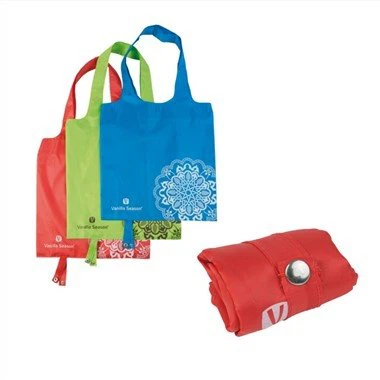
Consumer demand for cotton shopping bags has expanded from basic durability to design aesthetics and versatility. Some of the best-selling products on the market include waterproof tote bags, foldable storage bags and partition structures for mothers and babies. Alibaba International data shows that in the first quarter of 2025, searches for shopping bag products in China grew 200% year-on-year, while orders in Europe grew by more than 110% year-on-year. Waterproof, foldable and custom-designed are among the key selling points. One enterprise's the "smart shopping bag," for example, with integrated RFID chips that track how much products are being used and how much carbon they reduce, are popular in high-end markets in Europe and the United States.
3. Scenario Expansion: from retail to the whole industry chain penetration.
cotton shopping bags application scenarios is expanding from traditional supermarkets to e-commerce, gifts, brand promotions and more. E-commerce platform cotton bags sold 1.89 billion bags in 2024, an increase of 14.3% year-over-year and well ahead of the overall industry growth. The market share of brand customization and corporate gifts reached 29.5%, which shows that corporations attach great importance to environmental protection carrier in image dissemination. Carrefour, for example, works with suppliers to develop cotton bags that meet the European Union environmental protection standards, buying more than 5 million bags of a product each year.
Iii. Technological Breakthroughs: Industry leap from "material substitution" to "Performance Upgrade"
Large-scale applications of biobased materials;
polylactic acid cost of biomaterials such as PLA and PHA was significantly reduced. Domestic PLA capacity will rise to 250,000 tonnes per year by 2024, down from less than 50,000 tonnes in 2020, at a cost of 35%. Jinfa Technology, Lanfan Medical and others have improved the tear resistance of cotton shopping bags by 40% while maintaining their biodegradability through a combination of PLA and PBAT modification. If 30% of the country's plastic shopping bags were replaced with PLA materials, it could reduce carbon emissions by about 1.2 million tons a year, according to an assessment by Tsinghua University's School of Environment.
2. Intelligent manufacturing combined with green manufacturing.
More than 40% of large cotton bag companies use automated tailoring for sewing assembly lines, with unit production costs down 6.7% compared to 2023. One enterprise in Zhejiang Province, for example, used artificial intelligence vision detection inspection system reduce the product defect rate of its products from 2% to 0.3%. A factory in Jiangsu Province uses a low-temperature dyeing technology to produce cotton bag that save 30% of water and 15% of energy per ton. The Ministry of Science and Technology's National Key Research and Development Plan has set up special funds to support research and development of bio-based materials and green printing and dyeing technologies. Some of the results have been applied in cotton bags production.
3. Exploring circular economy model
Leading companies began laying out ``product-oriented a service"model, such as leasing, recycling and selling cotton bags, to build closed-loop systems. An enterprise and an e-commerce platform launched a ``old for a "trade-in" program. After being sorted, 30% of the recycled bags are used to produce recycled fibres, with 70% donated to good causes. Applying Digital technology to a traceability system to present consumers the raw material sources and environmental benefits of a product through a QR code or RFID label enhances brand trust.
IV. Global competition: the overseas breakthrough from "Made in China" to "Chinese standards"
Structural opportunities in export market
In 2024, China exported 2.13 billion pieces cotton bags, mainly to the EU, North America, Japan and other markets, of which 41.2%% were exported to the EU. textile packaging packaging is in high demand due to the impact of the European Single-Use Plastics Directive. export volume are expected to increase to 2.35 billion units in 2025, an increase of 10.3% year-on-year. According to Alibaba International, the average unit price of high-end bespoke tote bags for export rose 17% year-on-year, indicating an improvement in the technology premium capacity of Chinese enterprises.
2. Addressing international standards and Green Barriers
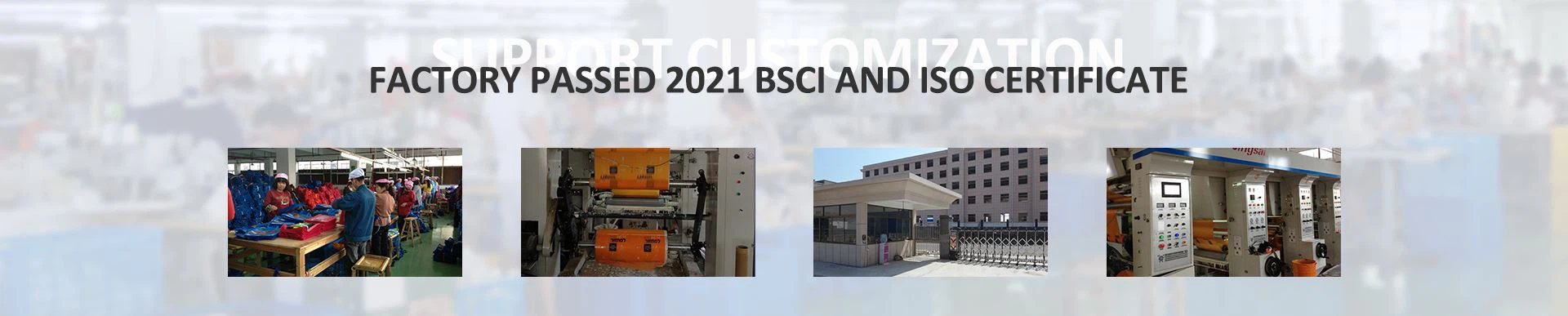
More than 60 countries and territories around the world have or plan to ban or tax single-use plastic products, while promoting certification of recycled material content, compostability standards and carbon footprint labeling systems. Through participation in ISO9001 quality management certification, GRS global circulation standard certification, OEKO-TEX eco-textile certification, etc., Chinese enterprises have broken through the threshold of international market access. For example, a custom-made cotton bags from a Carrefour enterprise successfully entered the high-end market in Europe and the United States by meeting both the EU EN 13432 degradation standard and the US ASTM D6400 standard.
3. Global Layout of Industrial Chains
Through vertical integration, leading enterprises strengthen their cost advantages and realize full chain control from raw material recovery to end-product manufacturing. For example, one enterprise has localised its supply chain supply chain up cotton planting in Xinjiang, textile factories in Jiangsu, printing and dyeing sewing workshops in Guangdong, and radiating into the European and American markets through its South-East Asia branch factory. This layout not only shortens the delivery cycle, but also avoids the risk of international trade frictions.
V. Future Outlook: Industrial Evolution from Single Product to Sustainable Ecology
The explosive growth of the cotton shopping bag market is essentially a systemic industry upgrade driven by environmental demand. In the future, there are three major trends in the industry:
Technology-driven performance revolution: The cost of biobased materials is expected to fall further below 1.5 times that of traditional plastics, while key metrics such as heat resistance and printability will meet the threshold for commercial applications.
model innovation and ecological construction: The "product + service" model will become mainstream. Businesses can boost profit margins through value-added services such as leasing, recycling and carbon credits. For example, one business plans to launch a system of "cotton bag carbon accounts" where users can accumulate carbon credits each time they use the system, which they can then trade for goods or discounts.
China's solution: With over 50% of the world's environmentally friendly shopping bags production capacity, leading enterprises will take the lead in setting international standards, such as pushing for group standards such as theCarbon Footprint Calculation Method of Cotton Packaging Materials, to enhance China's global industry voice.
The industrial revolution, sparked by environmental demands, is reshaping the entire industry chain, from raw material supply and manufacturing to consumption terminal. When cotton shopping bags are transformed from "policy-mandated alternatives" to "lifestyle carriers that consumers actively choose," this is not only an expansion of the market size behind them, but also a global practice of the concept of sustainable development.