

What is the production process of polyester bags?
Dec 08, 2025
Polyester bags have become a staple in the modern world, offering durability, versatility, and an eco - friendly alternative to traditional materials. As a supplier of polyester bags, I am excited to share with you the intricate production process that goes into creating these useful items.
Raw Material Sourcing
The first step in the production of polyester bags is sourcing the raw materials. Polyester is a synthetic polymer made from petrochemicals. The most common type used for bag production is polyethylene terephthalate (PET). High - quality PET resin pellets are carefully selected. These pellets are sourced from reliable suppliers who adhere to strict quality control standards. The purity and consistency of the PET resin are crucial as they directly impact the final quality of the polyester bags. For instance, impurities in the resin can lead to weak spots in the fabric, reducing the bag's durability.

Extrusion
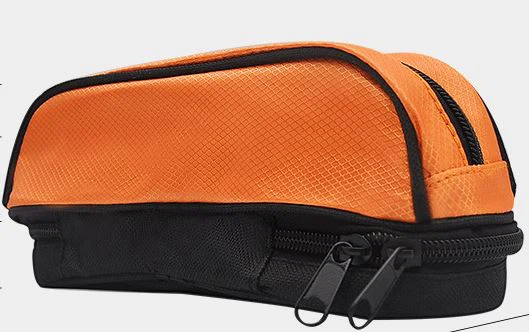
Once the PET resin pellets are obtained, the extrusion process begins. The pellets are fed into an extruder, a large machine that heats the resin to a molten state. Inside the extruder, the resin is mixed and forced through a die, which shapes it into a thin, continuous sheet. This sheet is then rapidly cooled using a water bath or air jets. The cooling process is carefully controlled to ensure the proper crystallization of the polyester, which gives the material its strength and flexibility. The thickness of the sheet can be adjusted according to the requirements of the bag. Thicker sheets are used for heavy - duty bags, while thinner ones are suitable for lighter applications such as Stationery Pencil Bag.
Drawing and Texturizing
After extrusion, the polyester sheet undergoes a drawing process. The sheet is stretched in both the machine direction (MD) and the cross - machine direction (CD) to align the polymer molecules. This alignment significantly enhances the strength and tear resistance of the material. The stretching ratio can be adjusted to achieve different properties. For example, a higher stretching ratio can result in a more lightweight yet strong fabric.
Following the drawing process, texturizing may be carried out. Texturizing adds bulk and softness to the polyester fabric. There are several methods of texturizing, including false - twist texturizing and air - jet texturizing. False - twist texturizing involves passing the yarn through a heated zone while twisting it, creating a crimped or curly effect. Air - jet texturizing uses high - pressure air to entangle the fibers, giving the fabric a more natural feel.
Printing and Coating
Once the polyester fabric is ready, it can be printed with various designs. Printing is an important step as it allows for customization and branding. There are different printing techniques available, such as screen printing, digital printing, and heat transfer printing. Screen printing is a traditional method that is suitable for large - scale production of simple designs. Digital printing, on the other hand, offers high - resolution printing and is ideal for complex and detailed designs. Heat transfer printing is often used for transferring photographic - quality images onto the fabric.
In addition to printing, a coating may be applied to the fabric. Coating can provide additional properties such as water resistance, UV protection, and anti - static properties. A common type of coating is a polyurethane (PU) coating. The coating is applied to the fabric using a roller or a spraying method. The thickness and type of coating can be adjusted depending on the intended use of the bag.
Cutting and Sewing
After printing and coating, the fabric is cut into the desired shapes and sizes. Cutting is typically done using automated cutting machines, which ensure precision and consistency. The cutting pattern is designed according to the bag's design, taking into account factors such as seams, folds, and handles.
Once the fabric pieces are cut, they are sewn together to form the bag. Sewing is a critical step that requires skilled labor. Different types of stitches are used depending on the strength requirements of the bag. For example, a double - stitch or a zig - zag stitch may be used for areas that require extra durability, such as the handles and the bottom of the bag. Specialized sewing machines are used to handle the polyester fabric, which can be slippery and difficult to sew.
Quality Control
Throughout the production process, strict quality control measures are implemented. At each stage, samples are taken and tested for various properties such as strength, colorfastness, and dimensional stability. For example, the fabric's tensile strength is measured using a tensile testing machine to ensure it meets the required standards. Colorfastness is tested by subjecting the fabric to various environmental conditions, such as washing and exposure to sunlight.
Before the bags are packed and shipped, a final inspection is carried out. Each bag is carefully examined for any defects, such as loose threads, uneven seams, or printing errors. Only bags that pass the quality control tests are approved for sale.
Packaging and Shipping
Once the bags have passed the quality control checks, they are packaged. Packaging is designed to protect the bags during transportation and storage. The bags are usually folded and placed in plastic bags or cardboard boxes. Labels are attached to the packaging, indicating the bag's size, color, and other relevant information.
The packaged bags are then shipped to customers. Depending on the customer's location and the order size, different shipping methods may be used, such as air freight, sea freight, or land transportation. The shipping process is carefully coordinated to ensure timely delivery and minimize the risk of damage.
Conclusion
The production process of polyester bags is a complex and multi - step operation that requires careful planning and execution. From sourcing the raw materials to shipping the final product, every stage plays a crucial role in determining the quality and functionality of the bags. As a supplier of polyester bags, we are committed to using the latest technologies and best practices to ensure that our customers receive high - quality, durable, and stylish bags.
If you are interested in purchasing polyester bags for your business or personal use, we invite you to contact us for a detailed discussion. We can offer a wide range of customization options to meet your specific requirements. Whether you need a simple Stationery Pencil Bag or a large - scale order of promotional bags, we are here to help.
References
- "Polymer Science and Technology" by Charles A. Daniels
- "Textile Processing: Principles and Practice" by Subramanian S.