

Do cotton garment bags absorb moisture?
Dec 04, 2025
In the world of garment storage, cotton garment bags have emerged as a popular choice for many. As a dedicated supplier of [Cotton Garment Bags], I've had numerous conversations with customers about the properties and benefits of these bags. One question that frequently arises is, "Do cotton garment bags absorb moisture?" In this blog post, I'll delve into the science behind cotton's moisture - absorbing capabilities and how it impacts the use of cotton garment bags.
The Science of Cotton's Moisture Absorption
Cotton is a natural fiber derived from the cotton plant. Its molecular structure plays a crucial role in its ability to absorb moisture. Cotton fibers are made up of cellulose, a complex carbohydrate. Cellulose has hydroxyl groups (-OH) that can form hydrogen bonds with water molecules. This chemical property allows cotton to attract and hold water.
On average, cotton can absorb up to 27 times its own weight in water. However, this high absorbency is more relevant in a fully saturated environment. In normal atmospheric conditions, cotton can absorb about 7 - 8% of its weight in moisture. This means that a 100 - gram cotton garment bag can hold approximately 7 - 8 grams of water vapor from the air.
The reason cotton is so effective at absorbing moisture is due to its porous nature. The fibers have tiny spaces between them, which act as channels for water molecules to enter and be trapped. This is different from synthetic materials like polyester, which have a more compact molecular structure and are less likely to absorb moisture. For example, polyester may only absorb about 0.4% of its weight in moisture, making it far less effective in dealing with humidity compared to cotton.
How Moisture Absorption Affects Garment Storage
When it comes to storing garments, the ability of cotton garment bags to absorb moisture can be both an advantage and a potential drawback.
Advantages
- Preventing Mold and Mildew: In environments with high humidity, excess moisture in the air can lead to the growth of mold and mildew on clothing. Cotton garment bags can act as a buffer by absorbing the extra moisture. By keeping the immediate environment around the garments drier, they reduce the risk of mold and mildew formation. For instance, in a basement storage area where humidity levels can be quite high, a cotton garment bag can help protect valuable woolen suits or silk dresses from being damaged by these fungi.
- Maintaining Fabric Quality: Some fabrics, such as natural fibers like wool and silk, are sensitive to changes in humidity. Too much moisture can cause these fabrics to lose their shape, become stiff, or develop an unpleasant odor. Cotton's moisture - absorbing property helps to maintain a more stable humidity level around the garments, preserving their quality and appearance over time.
Potential Drawbacks
- Risk of Over - Absorption: If the environment is extremely humid or the cotton garment bag is exposed to direct contact with water, it can become overly saturated. When this happens, the bag may not be able to dry out quickly enough, and the excess moisture can transfer back to the garments. This can lead to the very problems it was supposed to prevent, such as mold growth and fabric damage.
- Long - Term Storage in High - Humidity Areas: In areas with consistently high humidity, like tropical regions, the continuous absorption of moisture by the cotton bag can eventually lead to the degradation of the bag itself. The fibers may weaken over time, reducing the bag's durability and protective capabilities.
Our Cotton Garment Bags: Designed for Optimal Moisture Management
At [Our Company], we understand the importance of moisture management in garment storage. That's why our Cotton Garment Storage Bags are designed with features to ensure that they can effectively absorb moisture without causing harm to the stored garments.

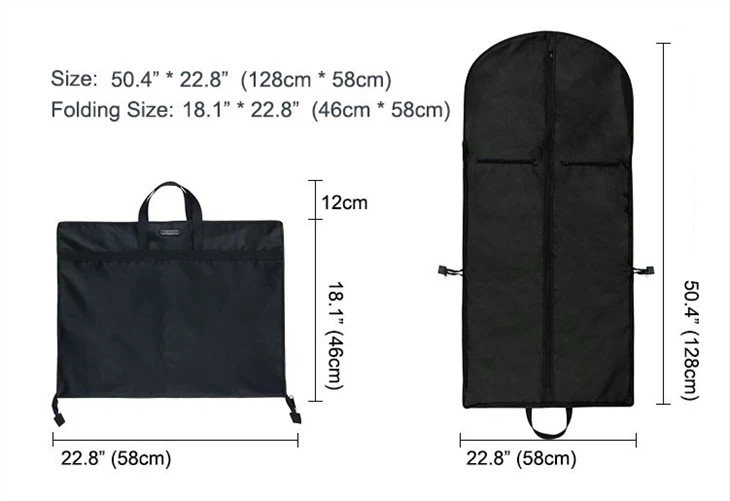
Our bags are made from high - quality cotton that has been treated to enhance its moisture - wicking properties. This means that while the bag can absorb moisture, it can also release it more efficiently when the environmental conditions change. For example, if the humidity in the storage area decreases, the bag will gradually release the absorbed moisture back into the air, maintaining a balanced humidity level around the garments.
We also offer Large Garment Bags for Storage that are ideal for storing long gowns, coats, and multiple items at once. These large bags are constructed with reinforced seams and a breathable design to allow for better air circulation. This helps to prevent the buildup of moisture inside the bag and ensures that the garments remain fresh and dry.
In addition, our Reusable Cotton Garment Bags are not only eco - friendly but also designed to withstand repeated use. They are washable, which means that if they do become saturated with moisture or dirt, you can simply wash them and reuse them. This not only saves money but also reduces waste.
Conclusion
In conclusion, cotton garment bags do have the ability to absorb moisture, and this property can have both positive and negative impacts on garment storage. However, with proper design and usage, the advantages can far outweigh the potential drawbacks. At [Our Company], we are committed to providing high - quality cotton garment bags that offer optimal moisture management for your valuable clothing.
If you're interested in learning more about our products or have any questions regarding cotton garment bags and moisture absorption, we encourage you to reach out to us. We're here to help you make the best choice for your garment storage needs. Whether you're a fashion enthusiast looking to protect your designer clothes or a business owner in the garment industry, our team is ready to assist you. Contact us today to start a conversation about your procurement requirements.
References
- "Textile Science and Technology: Fundamentals of Fibers, Yarns, and Fabrics" by J. E. Hearle.
- "The Handbook of Fiber Chemistry" edited by Menachem Lewin and Eli M. Pearce.
- Research papers on cotton fiber properties and moisture absorption from academic journals such as the "Journal of Applied Polymer Science".